
Leading the Way in Clinical Research

Video
Leading the Way in Clinical Research
Audio
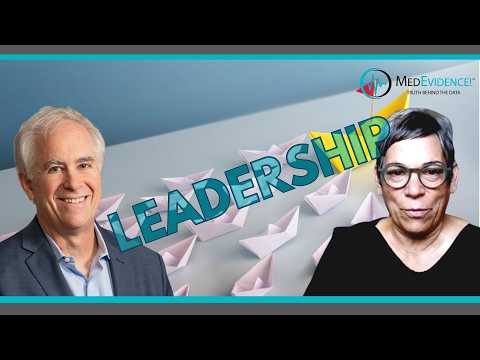
Leslie Pimentel Byatt joins Dr. Michael Koren to talk about leadership in the clinical research space. The two research professionals discuss the importance of qualified researchers in a research trial and the qualities that make for a good clinical research leader. They also talk about research as a treatment option and the benefits observed in research patients (even those in the placebo arm). They explain that the attention, care, and time with research professionals leads to better understanding and health for those who join, and that's on top of the altruistic benefits to science and health in general.
|
|

Transcripts
Transcript generated by AI:
Leslie Byatt 0:00
If you're out there listening to this and you're interested in furthering your career and leadership, all I can say is it's up to you to do it. You it's right there for your taking, but you have to reach out and grab it and want it. And really, I think the people who who make the who who move forward in this industry are the people who are sort of lifetime learners. That's their love language. And um, because that's what this industry is.
Announcer 0:26
Welcome to MedEvidence! Where we help you navigate the truth behind medical research with unbiased evidence-proven facts, hosted by cardiologist and top medical researcher, Dr. Michael Koren.
Dr. Michael Koren 0:37
Hello, I'm Dr. Michael Koren, the executive editor for MedEvidence. And it's my great pleasure to introduce an old friend and colleague, Leslie Byatt, who is joining me on this MedEvidence program, specifically to talk about a really important part of the clinical research process, which is how to develop leadership, how to train people, and how to get the message out to our patients that research is a really good health option for many people, and they may not even know about it, and it may be in their backyard. So, Leslie, thank you for joining me on MedEvidence, somebody I've known for many, many years. Always good to catch up with you. We just did that before we got on air. And why don't you introduce yourself to our audience and let us know a little bit about your background and what you're doing currently, which is a very, very prominent title, Director of Clinical Operations at the University of New Mexico Hospital.
Leslie Byatt’s Path Through Research
Leslie Byatt 1:37
Hi. Well, thanks so much, Dr. Koren, for having me. Yes, it is so nice to catch up with you and hear all about what you guys are doing, how incredible your work is. As you said, I've been in clinical research well for for over 30 years. I'm sorry to date both you and I. And, you know, I started as a research coordinator and have sort of progressively moved up in my career into a managing coordinator, into a site director, um, and have had the opportunity to work with the University of New Mexico, both on in their comprehensive cancer center, which was a real um direction change for me in as far as my career went, but it gave me an opportunity to really look at some and at clinical research in a different way. And I was a operations manager there. And then I had the amazing opportunity to move to the hospital, UNM Hospital, and where I am now the director of clinical trials operations. And the most exciting part of that was that I am starting that department from the ground up. So I've gotten to take the 30 years of experience and really build something, you know, from infancy. So it's been a really exciting three years at UNMH.
Dr. Michael Koren 3:01
Well, that's that's terrific and well deserved this incredible career success. I'm not surprised at all, having known you for many, many years.
Clinical Trials As A Care Option
Dr. Michael Koren 3:09
So let's break it down for people. Both of us are big believers and incredibly passionate about the idea of research as a care option.
Leslie Byatt 3:19
Right.
Dr. Michael Koren 3:20
And patients don't necessarily understand that because there's even a question about is research care? So I don't know if you want to weigh in a little bit on that in terms of your experience and maybe even give us an anecdote or two about how the exposure to research is both an opportunity for all of us to learn from each other, but also an opportunity for patients to maybe get different type of care and sometimes even better care they would get just through a regular clinical practice. So please feel free to opine on that.
Leslie Byatt 3:55
Sure. I think you're right on both fronts, but I think there's an advantage to being in a clinic in a clinical trial when it's an option. There's certainly the altruistic notion and part of of clinical research where you know you're helping the future. And I think that's a really important part, but I don't I think it sells research short in that patients really get really good care in a clinical trial, whether that's and it's not necessarily directly related to the to the treatment that they could or could not be getting. It's related to the care that they're getting and the attention to their care. And really, most importantly, the the knowledge from the people that are giving them the care. It's really the experts in the field who are doing this research. And we can look at, you know, your work in lipids and and things like that that say these are the these are the folks who are really breaking ground in this area, and you have an opportunity to work with them as a patient and as a, you know, and really take part in your own care. So it's a great advocacy work too from from the standpoint of being part of your own health care.
Dr. Michael Koren 5:10
Yeah, and that's a great point. Research tends to attract very talented teams of people, and those teams in turn help our patients in day-to-day stuff, even things that are a little bit outside the protocol. So just exposure to these great teams benefits our patients. So thanks for bringing up that great point.
Leslie Byatt 5:29
Absolutely. So absolutely.
Building Trial Operations From Scratch
Dr. Michael Koren 5:31
Talk to us a little bit more about your philosophy of how you're building this team from scratch and how you're developing that talent, and then ultimately how the patients benefit from it.
Leslie Byatt 5:43
Sure. So it's interesting because my team, I to be transparent, my train, my team is mostly administrative. I don't, I don't manage the actual folks who are doing the who are doing the work. But the the way in which my team is being developed, it it strongly influences the quality of their ability to operationalize their their trials. So from building, building something from the ground up, as you know, is an opportunity to take the information that you are passionate about, the things that you've learned that you want to do, and the things that you've learned that you don't want to do or how you want to do them, and put them into place. And so it was a it was a it was an opportunity for me to take the things that I'm most passionate about, about research, which is the ability to be part of the solution and and keep that as sort of the mission-driven purpose about this team. And so I surrounded myself with people who know more about things than I do. And I, you know, I feel strongly about my research expertise and knowledge, but I needed a lot of help in the finance area and education area. So I surrounded my myself with folks like that. And we're really building this sort of ecosystem to help investigators and their teams be able to really understand how to do their work in an ethical, efficient, and and really using project management uh influences to operationalize things very efficiently. And so my team has really has taken this this purpose-driven sort of theory and just ran with it. It's it's really exciting to watch everybody in action.
Inside An Academic Medical Center Program
Dr. Michael Koren 7:39
That's great. So tell us a little bit about the program in in New Mexico. How many coordinators are there, uh, what therapeutic areas you're addressing? You mentioned cancer involvement, but just for everybody to know.
Leslie Byatt 7:51
Yeah, so academic academic medical centers are sort of an interesting breed of clinical research. And we have the you know, the opportunity to work from bench to bedside, which is always really exciting and and sort of not always be, we I should say we have equal parts, sponsor-driven trials and federally funded trials and investigator-initiated trials. So it's really exciting to see all of those types of avenues come together. We it's an act, it's a it's the only academic medical center in New Mexico. We have a comprehensive cancer center. So the can't the cancer center alone does about 300 clinical trials annually. And on the on the hospital side, we're at about 200. We have off the top of my head, I think we have about 10 different, 10 to 12 different divisions doing research from pediatrics to geriatrics to orthopedics to surgical studies. We do a lot of we do a lot of investigator-initiated trials. That's that's really exciting. And being able to be part of the development of those studies and grant funding and stuff is is kind is really exciting. And then we have teams of folks that work within those divisions, coordinators, data coordinators, you know, regulatory folks. We the the regulatory teams are compartmentalized mostly because we because we're an academic medical center, we have our own IRB. So we have both internal and what we call external IRBs. So that that's a little bit more complicated than just a sort of off-site or standalone research center. But we're doing all kinds of research. It's sort of a lot of moving parts. It moves a little slower than than the traditional research site because we have a few more bureaucratic hoops to go through, obviously.
Dr. Michael Koren 9:51
But a private site that doesn't have to necessarily do some things that an academic uh public medical center
Who Thrives In Clinical Research
Dr. Michael Koren 9:58
has to do. But so here's I have a bunch of questions for you, but just to uh get your perspective on something that really fascinates me, is is that research gene, I like to call it, is that something that's nature or nurture? And obviously when I say research gene, it shows you a little bit of my bias. But uh I always wondered if researchers are born or are they trained? Or what's the combination there of? I think I think certain personality types tend to do better in research, and those people may have been born with those characteristics. And maybe part of our process really is to identify the right people rather than to take a random healthcare person and turn them into a researcher. So I love your comments on that concept.
Leslie Byatt 10:50
So that's that's interesting. I've actually never never thought of it that way, but I think of myself, you know, and I fell into this. I had no idea this was a career. And, you know, 30 years ago when I started, the typical research coordinator was a nurse. So I had a very forward-thinking boss. I don't know who that might have been, who who, you know, could see that it that coordinators could be different people. They didn't have to be nurses and they could be developed. But I I so I think not to cop out of the question, but I do think it's a little bit of it's a little bit of both. I think that the big thing is really really finding it, finding the finding this career, finding that this is even out there. I mean, it's it's a shameless plug, but ACRP is doing a lot of work on this right now. And and just knowing that like the Bureau of Labor Statistics doesn't even recognize clinical research coordinators as a as a profession. It's not on the BLS. So there's a lot of work being done now to s to to get some marketing into this field so that people say when they when I grow up, I want to be a clinical research professional. So I think that it's a little bit of both. If you find the career, if you find that this is out there and you have it in your soul that you wanna, that you're the kind of person who wants to give back, who is who likes the idea of sort of being on the forefront, but also the the the balance side of that is really having to deal with regular regulations and detail work and sort of the objective versus the subjective side of clinical research. I I think that it's in us and it needs to be nurtured. It needs to be nurtured, but I'm not sure you can just take anybody and make a research professional out of them. I think that if detail oriented, if uh if being, you know, wanting to help or or nurture folks and patients isn't in your DNA, I don't think this is the field for you. But I think more people have it in them than not.
Dr. Michael Koren 13:10
Interesting. Interesting. Yeah, it's it's a f fascinating area because as you point out, you have to be incredibly objective. You have to acknowledge the fact that in many studies we don't even know what you're taking exactly, but at the same time be completely convinced that we're doing you some good, which is usually true. Whether or not you're on treatment A or B or on a placebo. We know that on average, people just do better in clinical research. But not everybody really has that gene or that ability to think both abstractly and concretely, sort of at the same time.
Leslie Byatt 13:48
And be able to instill the confidence to the person who doesn't really understand the process that this really is appropriate.
Dr. Michael Koren 13:59
Absolutely. And it's interesting, lots of studies have shown that people in the placebo arm always seem to do better than anticipated. And we believe that is something that's intrinsic to research. Some people call it the Hawthorne effect, but it is something that we see over and over again that people in trials, patients in trials, just do better. And something very interesting about the human experience that I know both you and I have seen on a day-to-day basis.
The ALIGN Leadership Framework
Leslie Byatt 14:28
Right.
Dr. Michael Koren 14:28
So let's let's uh switch gears just a little bit. Tell me uh about some of your tactics in terms of leadership and how you bring people along.
Leslie Byatt 14:38
Sure. So you know, I've been doing this for a while, and two or three years ago, I I said, you know, there's guy, I I wanted to put some, I wanted to package what I was thinking. And it kind of came along when I when I went and went to the hospital and started this program. And I developed this very simple acronym called ALIGN, A L I G N, that really is a way to move clinical trials operations from a compliance-driven leadership format where it's just all about follow the regs, do you know, follow the protocol to a more shared directives kind of platform. So I think we you and I will both agree that when you when people have buy-in, when people believe in what you're doing, both from the team and the patient, that that the outcome is always better. So so that's what ALIGN is. And ALIGN is simple, it just stands for Agree, like agree on a mission, agree on a purpose, Link, link what you're doing to that mission so it's purpose-driven. Involve, involve your team, involve the people who are participating in solutions, Generate, generate a cadence, not just in meetings, but in communication. It's all about making sure people understand what's happening. And then lastly, Navigate, which is it was really the risk mitigation part. Navigate problems together. Let's not do things in silos. We got to work as a team and navigating risk management and identifying what barriers and pain points may be. And when you get to them, solve them together. And I think that's I think that's about building together, it's about building a real strong team culture so that nothing really can't be completed or fixed for a lack of a better way of saying it, together.
Dr. Michael Koren 16:45
Right.
Leslie Byatt 16:45
So it's pretty simple.
Dr. Michael Koren 16:47
Yeah, and well, but but those acronyms can be very powerful, as you know, because it gets people thinking systematically about even management issues. So I love that. So congratulations on being able to articulate that. That's really, really cool. That's super cool.
Publishing, Project Management, And AI Ethics
Dr. Michael Koren 17:03
So tell us, I know you do lecturing and talk about this. Uh tell tell us a little bit about what you're doing in the next few months in terms of getting this message out there.
Leslie Byatt 17:12
Well, I I sort of went public last year with A LIGN. I don't, you don't know this, but I'm finishing my doctorate in just like eight weeks. I'm in the weeks level here. So I'm finishing my my professional doctorate in executive leadership. A LIGN is my the manuscript, is the project I'm working on. So I'm hoping to get it published in the next six months to a year. But I am also working with some national conferences and talking about I like really my platforms are project management and clinical research and the importance of that structure and how that structure can help build a strong culture. It is, it is sort of the it is the engine around keeping people moving and showing that respect for people's time and effort. And then obviously I like to talk about leadership and and and really bringing people together. And I think we're better as a team than we are individually. And then lastly, I have this, I am totally into this AI thing. It's, you know, I'm loving it. So I I actually have a little manuscript being published in December on AI and the importance of AI and the ethics and clinical research, and specifically how we maneuver through it. So yeah, that's that's what I'm doing and keeping I'm keeping busy. Got lots going on, but I I'm loving it.
Dr. Michael Koren 18:38
Well, that's great. Well, AI and clinical research is a whole other topic that we won't have time to get into today. But that's absolutely touching us all, and we're all trying to figure out how we use some of these computer technologies in our day-to-day, including in training and management. So that that's pretty cool.
How Patients Can Explore Trial Options
Dr. Michael Koren 18:55
So I'm gonna make this sort of my final question. You give you given us some really, really cool stuff, but for patients, how do you look at the world of clinical research and decide if you should explore those options? So let's take somebody in New Mexico in your market, uh, but it can be for any market, of course, and they get diagnosed with something or they're concerned about something. How do you approach clinical research? What what advice can you give for patients, knowing that they're really super smart and passionate people like you that are building these systems?
Leslie Byatt 19:29
Yeah, I think I think it's interesting to put it in the New Mexico perspective, and I won't go I won't go too deep into that, but you know, New Mexico's rural, it's pretty rural, so clinical research in rural areas is a whole it could be a whole other topic, excuse me. And but I I think that I think that clinical researchers to to answer your question from the back end, clinical research have researchers have a responsibility to do some grass roots work on getting the word out. And you know, 30 years in, we're research is still has a stigma around it in some areas. You would have you would have thought that COVID would have helped us a little bit with that. There was so much you know, airtime on it. But I think that from a from a patient's perspective, understanding that research is a viable option and that having an open mind and asking the questions, not being afraid to ask questions and advocate for yourself when you're being approached by a clinical research team is important. And I also think that, and I know from experience that almost every question uh or or concern or hurdle that a that a potential research participant has about their ability to participate, whether that's safety or logistics or whatever it is, is answerable. I mean, the the goal is to help people get participate in a trial. It's not to figure out how they can't participate. So the research teams have the abilities to answer those questions and in the off times that the answer doesn't isn't it doesn't allow the patient to move forward. That's a real honest answer that only builds the trust between a patient and the team, so that the next time it comes around, they're more apt to participate. So I think it has to do with building relationships outside or before you need the trial. And so I think grassroots marketing efforts, whatever it might be in a community are really important so that the first time someone doesn't hear about a clinical trial is when they're sort of in crisis mode. I mean, I'm and I'm thinking of this from a cancer perspective. It's a little different if it's a, you know, you have OA of the knee and you're just looking for a new, a new treatment. The the pressure is a little different, but but the reality is the same. Clinical researchers need to be able to answer the questions and help people participate in a trial. And that participants need not be afraid to answer, to ask the hard questions because we can answer them.
Dr. Michael Koren 22:17
Right. Yeah, you made uh a couple of really important points that I'm going to amplify. Obviously, in some cases like cancer that didn't respond to conventional treatments, research is kind of a Hail Mary, if you will, and people understand that value proposition, but they don't often understand the value proposition for osteoarthritis or OA, as you mentioned, where they're disabled, they're getting some value from their non-steroidal anti-inflammatory agents, but they're getting also some stomach upset, and they want to know if there's other solutions out there for them. And although the protocol can't guarantee that we're going to give you a magic cure for your problem, you'll learn more about your condition, you'll learn more about how to deal with your problem from a day-to-day standpoint, and maybe find a therapy that also is a benefit. But interfacing with research professionals will inevitably help you do better than you would otherwise. And I think I really want to emphasize that not everybody understands that not all doctors or nurses or other healthcare people are research professionals. Some people do research as a part-time gig, and but nowadays more and more research - In fact, the majority of research is done by people that are dedicated. It's really a specialty of medicine, it's a specialty of nursing. And I would ask that question, encourage people to ask that question. Because sometimes people, sometimes marketing people throw out research to make it look more high-tech, but in fact, these are people that dedicate their lives to doing research right, including maximizing patient benefits, following all the regulations, and also mindful of the ethics that underlie what we do day-to-day. So I think you you helped make some of those points really, really well, and we appreciate that. Leslie, any fun any final comments about leadership that you want to share with our audience?
Lifelong Learning And Closing Thoughts
Leslie Byatt 24:12
I just think that if if you're out there listening to this and you're interested in furthering your career and leadership, all I can say is it's up to you to do it. You it's right there for your taking, but you have to reach out and grab it and want it. And really, I think the people who who make the who who move forward in this industry are the people who are sort of lifetime learners. That's their love language. And because that's what this industry is. It's always learning and being open to change and and and you got to love a regulation. I mean, if you don't like regulations, you this is the wrong place for you.
Dr. Michael Koren 24:53
Well, Leslie, uh, those are fabulous comments. Thank you so much for being a guest on MedEvidence. And I look forward to having another discussion with you sometime in the future.
Leslie Byatt 25:02
Thank you. Thanks for having me. It's it was really fun.
Announcer 25:05
Thanks for joining the MedEvidence Podcast. To learn more, head over to MedEvidence.com or subscribe to our podcast on your favorite podcast platform.

