
Lp(a) Goes Beyond “Good” and “Bad" Cholesterol

Video
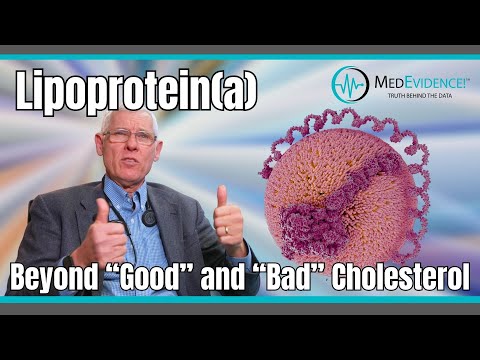
Lp(a) Goes Beyond “Good” and “Bad” Cholesterol
Audio
|
|

Transcripts
Transcript Generated By AI.
Announcer: 0:00
Welcome to MedEvidence, where we help you navigate the truth behind medical research with unbiased, evidence-proven facts.
Jackson Downey, MD: 0:07
Hello, I'm Dr. Jackson Downey. I've been a primary care doctor and a lipidologist for a good number of years, involved in doing clinical research concerning lipids. And so we all have heard about high cholesterol and how that can affect us and can cause things like a stroke and heart attack and valvular heart disease, kidney disease, dementia, and those kind of things. So we all want to avoid those things, right? So you've probably heard the story about cholesterol. So we know that cholesterol has good cholesterol, which is helpful. It goes around and kind of cleans up your body and opens things up. And we've also heard about bad cholesterol, things that we want to avoid. So the bad cholesterol is that LDL cholesterol. When it's high, it causes these problems that we just talked about. HDL protects those issues. So now we're going to talk a little bit about a new type of cholesterol issue that was discovered in the 1960s. It's called Lp(a). So Lp(a) is like a kernel of badness that was discovered. It has kind of three components. And that particular part of the cholesterol, the bad cholesterol, is particularly associated with heart attacks. So the higher that is, the higher the risk of heart attacks. It's also associated with valvular heart disease, primarily aortic stenosis, when you have a high Lp(a). So you remember the story of the Titanic. So the Titanic was built in Ireland. Then it hit four ports over in England and then sailed across the Atlantic, but it hit an iceberg. It sank and lots of people died. So when we think about that iceberg, we think about the ice that you can see on the top. But there's also all that ice underneath. And so lots of times in relation to cholesterol, there's this hidden ice underneath that no one knows about unless you test specifically for that type of cholesterol. So that's what we're talking about today. How do we find out about this bad cholesterol that could really affect us? And we know about one in five Americans have this really bad kernel of terrible cholesterol. And it's worse than Asians. We know that it can really affect our lives and cause these bad cardiovascular risks like heart attack and valvular heart disease that we just talked about. So the problem is this. This particular type of bad cholesterol has like a shell around it that protects it from certain types of breaking down. So it's taken a lot of work to figure out how what can we do about this? So we know about things like statins, like a torvastatin, rosuvastatin, crestor, lipitor. Those don't really affect Lp(a). So that's a problem. So how do we work on this? There's some other medications that are out there like Zetia or Ezetimibe. Minimal benefit lowering the Lp(a). There's a group of medications called PCSK9. They're mostly injectable. Now we have some oral forms that we're developing, but that only causes about a 25% reduction. So what is my Lp(a) level? My level is 8. So I'm one of the lucky guys. But we really want that less than 75. But some people come in with Lp(a)'s of 200, 300, 400. So that PCS K9 medication can lower it only to about 25%. So if you're at 400, you get to 300, you're still super high, you're super high risk. So what we know is that there's a linear connection between your level and your level of risk. So the higher that Lp(a) is, the worse things are for you in terms of cardiovascular risk. And those are the kind of things that we want to prevent. So one of the things that we're looking at is different types of medications to try to help the Lp(a). So it'll begin with some type of injectable medications and some oral medications that we're working on. But the first step, what is that? Check your Lp(a). So we know that there are millions of people in America that have elevated Lp(a) and know nothing about it. So the most important take-home message today, get your little Lp(a) checked so you'll know whether you're at risk. Since one in five Americans has this, it's important for everyone to get checked at least once. So once you get your Lp(a) checked, you can you can always do regular lipid panels after that because you have that level and it really doesn't change too much over your lifespan. And a lot of the things that work for other things like exercise and diet don't affect Lp(a) very much. Even if you're really overweight and you lose 100 pounds, it doesn't really affect Lp(a) very much. So we have to kind of figure out how to manage this. So one of the things that happens in our body is we have a liver. That liver helps break down bad stuff and it also helps build up good stuff. There's a cascade in the liver, and in the liver, we see the production of these things like LDL, HDL, Lp(a). So what we're trying to do is develop some medications that work in your liver to give your liver a message. What's that message? So you've inherited this problem of producing Lp(a) in too much amounts from parents and grandparents. You can't choose who your parents and grandparents are. So this is inherited. And there's nothing much out there that can we can do to help at this point in time, which is why we're working on things. So what we want to do is develop medications that go to your liver to normalize physiology. What does that mean? We want to take that, those DNA messages that you're that you've inherited and send a message to your liver to say, hey, chill, buddy. We've got too much of this already. Don't make more of this. We also want to develop some medications that block those receptors that are in the liver that cause your liver to do some things that are not good for you. One of the things that happens in life is that a lot of medicine is trying to figure out how to normalize what your body does abnormally. Kind of go turn the clock back in terms of age or turn the clock differently in terms of DNA and inheritance. So what we're trying to do is try to send messages to your body, your liver in this case, to say, hey, you've gotten this message to do this, but we actually want you to do this something else. Now we see this all the time. So let me give you an example. Some people can get stung by a bee, and you get a little swollen area, tenderness, a little bit of redness and warmth, but it's really not too bad. But what happens with other people? Other people will get that same bee sting, and all of a sudden they can't breathe. They break out in this rash. We call that anaphylactic shock. Their blood pressure goes down and they can die. So the body overreacted in some people to that bee sting. And that's why we have to segregate out certain people. Certain people are going to have a fine Lp(a), other people it'll be elevated and put you at risk. So that's what we're trying to do. Figure out, okay, who are these people that are going to respond like the bee sting that we need to kind of intervene in that way? We see the same thing in terms of heart disease. One of the things that happens is when you have a heart attack, some people's bodies react to that heart attack and make some bad decisions. And those bad decisions can actually make the heart attack worse and extend the injury to your heart. So one of the things that we do in the intensive care unit when we see people in the cardiac care unit is to go, what medicines do we need to add to send a message to that body not to react inappropriately in the setting of that heart attack? And so part of what we're doing with Lp(a) is the same thing. How do we normalize the physiology and send the message to the body to say, hey, don't make so much Lp(a). And so we're involved in doing research to look at this. How do we do this? So it begins with checking your Lp(a) and then looking to see whether you're a candidate for a program, since there's nothing out on the market now, to help us work on this. The benefit is not just to you, but it's the benefit is to humanity. So the work that we do here is helping all people. So if you jump in and help, then you're helping people in the United States and around the world in this particular area that puts people at high risk. So we want to kind of jump in, be involved in these things to help other people. Helping humanity, I think, is important. And it advances medicine. So just think about checking your Lp(a), getting involved in helping lower that Lp(a), but also helping others in the process. So one of the things that we can relate to about a high Lp(a) is the damage happens over time. It's kind of like having termites in your home. So if you find termites, you might not see the damage there for 10, 15, 20 years. But at some point in time, you're gonna walk into the front door, you're gonna grab the front doorknob, and you're gonna pull it off in your hand and go, oh my goodness, what is this? The whole front doorknob came off. I've got termites. And so having an elevated Lp(a) is like having termites in your body that you're eating up your cardiovascular system over time. So you may have normal testing now. They may do a heart cath normal, they may do coronary calcium testing all normal. Your CRP may be okay, showing, oh, you're fine, but your Lp(a) is high. So it's doing damage slowly over time. It's eating you up. So treating that Lp(a) is important. It's like having termites. Get rid of your termites.
Announcer: 10:51
Thanks for joining the Med Evidence Podcast. To learn more, head over to MedEvidence.com or subscribe to our podcast on your favorite podcast platform.

