
From Stage 4 to Survivor: How Clinical Trials Changed One Man’s Life

Video
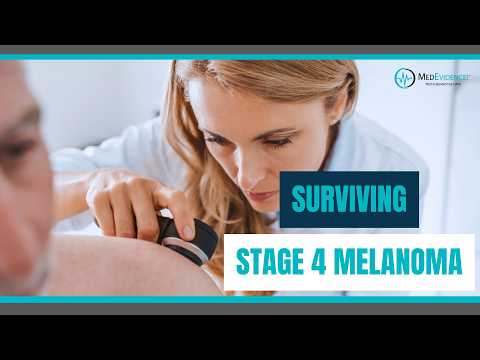
From Stage 4 to Survivor: How Clinical Trials Changed One Man’s Life
Audio
When T.J. Sharpe was diagnosed with stage 4 melanoma at just 37 years old, the statistics were devastating. With a newborn son, a two-year-old daughter, and limited treatment options available at the time, he faced a life-changing decision: pursue standard chemotherapy or take a chance on early immunotherapy clinical trials.
In this powerful episode of the MedEvidence Podcast, cardiologist and medical researcher Michael Koren sits down with T.J. to discuss his remarkable journey from cancer recurrence and uncertainty to becoming a long-term survivor through groundbreaking clinical research.
|
|

Transcripts
Transcript generated by AI
Announcer 0:00
Welcome to MedEvidence, where we help you navigate the truth behind medical research with unbiased evidence-proven facts, hosted by cardiologist and top medical researcher, Dr. Michael Koren.
Dr. Michael Koren 0:11
Hello, I'm Dr. Michael Koren, the executive editor of MedEvidence. And I have the unique privilege and honor to interview a patient who is a cancer survivor and who is involved in clinical trials that led to a very positive outcome. T.J. Sharpe is my patient. And T.J., I want to welcome you to MedEvidence and thank you so much for sharing your story.
T.J. Sharpe 0:35
Oh, thank you, Dr. Koren. Happy to be here today and looking forward to talking with you.
Dr. Michael Koren 0:39
So before we get going, and we mentioned this before we started recording, is I want to get your permission to discuss details of your medical history publicly. Obviously, doctors and patients have confidentiality agreements. We have HIPAA rules, and this is something that you feel passionate about. And I want to make it clear that I we have your permission to discuss these details.
T.J. Sharpe 0:59
Absolutely. I think I gave up those HIPAA rights a long time ago, so I'm happy to uh share what I have and helpfully it'll help somebody else.
Dr. Michael Koren 1:06
Well, that's great. I love that. And again, you can always reclaim those HIPAA rights. Obviously, once it's out there, it's it's it's harder, but it it doesn't mean you can't try. But thank you for being brave enough to share those details. So tell us a little about your story. As I understand it, you were diagnosed initially with melanoma as a young man. We thought it was just local, and then a few years later, it became widespread. And probably that was a time of absolute panic, I can imagine. So tell everybody about your story, about your initial diagnosis and how that led to a really important crisis in your life.
T.J. Sharpe 1:40
Sure. When I was 25, I was diagnosed with stage one B melanoma. Went into the dermatologist for something else. Uh, he scraped something off and called me a few days later and said, Don't believe what you read on the internet about melanoma. And I realized I had just become a young adult cancer patient. But I was 25 years old.
Dr. Michael Koren 1:57
And after that, so when one B means it was just local, it we the thought was that it hadn't really spread significantly.
T.J. Sharpe 2:04
Correct. Yes, it was a very local and very non-intrusive type of cancer. It was a very high success rate of we'll get rid of this and you should be okay. And I was, at least for 12 years.
Dr. Michael Koren 2:18
So the dermatologist, it was a dermatit a dermatologist cut it out with margins, and he everybody felt that things were were were fine.
T.J. Sharpe 2:26
Yep, they they took the lymph nodes, which was under my arms, which is where it would have spread if it had spread, and tested those and said that there was nothing there. So they felt confident they had gotten everything out and then I should be good to go.
Dr. Michael Koren 2:39
Great. Okay, well, and that's an important detail. Thank you for sharing that. Okay. So you thought you were good, and then what happened?
T.J. Sharpe 2:46
And then I went into the the ER down here in Fort Lauderdale, where I live, with what I thought was just a spiking fever uh and some fatigue. I left that ER 16 days later. The the emergency room doctor took a look at my scans and said, with your history of melanoma and the and these spots on your lungs, I think you have a recurrence of your cancer.
Dr. Michael Koren 3:06
Wow, uh, and I was how long was that after your your initial surgery?
T.J. Sharpe 3:11
12 years. So for 12 years it stayed inside me.
Dr. Michael Koren 3:14
So you thought everything was good, and then boom, all of a sudden you get this word after presenting to the ER, probably you thought it was just an infection of some sort. And here you get this information that, oh my God, you have cancer, and that seems to have spread. So wow, you must have been freaking out.
T.J. Sharpe 3:30
Very much so. I was I was 37 years old. I had a two-year-old daughter. We had our son who was just born, he was four weeks old. And I had and I had all of a sudden heard stage four melanoma. We it took a few days to understand to go through some of the diagnostic testing. But when the when the oncologist finally went with me, he said, This is metastatic cancer. It is it has spread from somewhere and it's in different parts of your body. And you know, we're gonna we're gonna remove one tumor from your from your small bowel right now, but we need a systemic treatment. We need a treatment that's gonna impact the entire body and any cancer cells in your body. And that when he told me that, and I started doing my my research and my googling on stage four melanoma, you know, I realized at the at that time, you know, how poorly patients were doing and how how short of a lifespan most patients with my diagnosis would have.
Dr. Michael Koren 4:26
Yeah, what was the predicted lifespan when you read about that back then?
T.J. Sharpe 4:30
The the median lifespan. So for those of you out there who can remember your statistics, that's about the half half the patients with my diagnosis would live about 18 months. So that was like the middle part. So you you know, you get you get to 18 months, and half of the people with your diagnosis have already passed away. And the uh the five-year survival rate, I believe, was like eight percent.
Dr. Michael Koren 4:53
Wow. Wow, that must have been scary, especially with the young kids. So so tell us what happened next. Had you what was the treatment plan once you were diagnosed?
T.J. Sharpe 5:02
Well, it was the treatment plan was was what can we do? My I had I I was an IT project manager at the time, and early in my career I had worked in pharmaceuticals. So I learned what clinical research was.
Dr. Michael Koren 5:15
Oh, okay.
T.J. Sharpe 5:16
And and like I like to tell people, clinical research is what other people did to get medicines approved. And now all of a sudden, I'm looking at at the options for melanoma, and the standard of care chemotherapy gave me those, those were the odds for chemotherapy, the ones I just mentioned. But there was this new type of treatment coming up called immunotherapy. The first product had just been approved earlier that year as a second line. So this after you did chemotherapy, you could do this product called Yervoy.
Dr. Michael Koren 5:47
And did you get you get drugs like cisplatin or doxorubicin for your cancer or do or taxol? What type of things we're getting out of curiosity?
T.J. Sharpe 5:57
Well, that that was that was what was initially offered to me by the first oncologist. And I looked around and I said, you know, that's that's a pretty dim survival rate. And I had been able to get in touch with other patients or or read some things on on some of the advocacy websites about the promise of some of these phase one clinical trials in immunotherapy. So the one had already been approved. There were other ones called anti-PD1 inhibitors that were that were just entering their first trials. And I'm looking at at the at what some patients and advocates were saying that these show so much promise. And my choice was do I just do the chemotherapy or do I look to see if there's this opportunity for me to watch my little kids grow up, even if it's even if it's a chance in clinical research, and we know that there's not a guarantee that you're gonna get a great result. There was something else. And I and I weighed my options and said, you know, I want the best odds of of seeing my little my little girl, you know, grow up, my little boy go to college, while, you know, walking her down the aisle. And and we looked into clinical research and eventually found a combination of immunotherapy on trial that I wanted to uh try because it was uh in my mind gonna give me the the best chance of a durable response.
Dr. Michael Koren 7:17
Wow. So you you went through went uh with a clinical trial option. We like to call that research as a care option, and you didn't necessarily start with the standard chemotherapy. And tell us what happened. How did it how did it work out? Did you have lots of side effects? So was it a straight course? Was it just magic, or was there a lot of bumps in the road? There were a lot of bumps in the road. You're still with us, so I know it had to turn out pretty good.
T.J. Sharpe 7:42
Uh the the trial itself was a huge learning experience from me for me. It was it, I I I went, uh, I went to a great facility. I was a it was a research facility, and they were they were doing a combination of immunotherapies, and it just sounded, I told them, I go, this sounds like really personalized medicine. And it was a T cell therapy where they actually took a tumor out of me and and and used the T cells from that tumor uh that best fought my cancer, and then and then made a whole bunch of them and put them back inside me. And I'm like, this sounds really cool. I want to try this. I was the first person to try it on the trial. They think I might have been the first person to ever try it in that sequence. They didn't really have uh have somebody that had done it before, but I learned quite a few things, you know. You know, one that the clinical research process is is
Dr. Michael Koren 8:31
rigorous.
T.J. Sharpe 8:32
And uh there's a there's a lot of words for it.
Dr. Michael Koren 8:36
Rigorous with a lot of paperwork.
T.J. Sharpe 8:38
Yes, there is, and that was part of it was that I I didn't my trial wouldn't start because uh part of the the part of it was the contract wasn't signed. And you know, it actually I actually had to call one of the pharmaceutical companies that were involved and you know and tell them like I you know this is this is paperwork for you, but this is my life, and this is my kid's father who uh wants to be on this and wants to try this medicine and wants to give your clinical research a patient. So don't make this any harder than it has to be.
Dr. Michael Koren 9:05
Right. Well, I love that. That great advocacy. Thank you for that.
T.J. Sharpe 9:08
. Uh and I never realized at the time that's that's that that that's the kind of voice that the patients need, and some patients don't have, and I'm lucky that I do because it it was an immune trial. There was a there was a diverticulitis that I had. So like a little perforation that if part of the trial was they have to kind of take all of my my immune system down and then put a new immune system in it, it's like changing the oil for immune systems. And the diverticulitis had all bacteria, and if they would have done that, it probably would have killed me. So I had to get a costomy bag for two years. I didn't have to, I chose to. I wanted to stay on the trial. And and that was that was my choice. And I said, if this is still the best thing for me, if this asking my my doctor, who is you know an amazing, amazing oncologist, if you would if you were 37 years old and you want to see these kids grow up, would you what what trial would you do? And he was adamant this is the the best one that I would do. And he said, I he goes, I know it's it's hard, but this this will be a quality of life issue right now, but it will keep you on the trial. So I I was all for it. I said, give me, you know, give me the surgery if that's what it's gonna take.
Dr. Michael Koren 10:20
And you gotta get a colostomy bag just to stay in the trial, isn't that crazy? But
T.J. Sharpe 10:26
that's true.
Dr. Michael Koren 10:27
Thank fortunately you did it, and it sounds like it it worked out pretty well. Although people get really sick from these immunotherapy trials. You you you probably had numerous side effects, I'd imagine.
T.J. Sharpe 10:38
I had I had a few, yes, because there was a combination of immunotherapies, and it it contributed to a number of I ended up in the ICU at one point, which I don't really remember, but the uh the the the overall toxicity, the overall effect on my body was it was hard to say there was one thing. You know, I in an ironic ironic thing, my my hair fell out, but like the hair on my top of my head has been gone for a long time. So it ended up being like the little goatee hair fell out. And okay. All right. Little things like that. Medically, there was not one thing that crashed, it was more a cumulative effect of uh on losing weight. Yeah, there's a lot of fatigue. There was, you know, some some blood levels that got that that were concerning, which they expected because part of the immunotherapy was was a was a a drug called interleukin 2, which really is has known very difficult side effects. So they don't in the trials that they do now, they kind of cap it. I did one extra one, but they realize that there's only so many before it starts to be more toxic than beneficial.
Dr. Michael Koren 11:45
So uh you you mentioned to me that you had done two different trials. The first one may not have been quite as successful as the second one. You want to explain that a little bit to the audience?
T.J. Sharpe 11:56
Sure. When when I got done this trial, and it was sort of uh it was two immunotherapies kind of blended together. When I finished it, we did scans, and you could kind of see that there were still tumors growing. You could see that I was losing weight. It looked visually like I was a cancer patient and one that wasn't doing very well. And we took the scans and we noticed, well, there was some decrease in some of the tumors, but the ones, the big ones, were continuing to grow and there was more there. So rather than wait to see if if that was going to resolve itself, my oncologist said, you know, you need to go to plan B. Let's let's figure out what that is. And he offered me a an anti-PD1 trial, which is a type of uh another type of immunotherapy. I ended up not going with that trial uh and going back to, you know, we had we'd actually traveled to the the first facility several hours away, and we kind of wanted to be close to home, and there was another trial that was very similar. Uh, so we got we went kind of moved back home after a few months of actually having to live on the road back and forth. And I found it an anti-PD1 trial for a drug at the time was called MK3475. It didn't even have a didn't even have a name at that point. It was a second ever trial for for what is now called Ketruda, which has been an amazing drug for, I'm a guy, I don't even know how many indications it's for. It's it's got to be for like 15 or 16 different cancers now. It's approved for.
Dr. Michael Koren 13:21
Yeah, it's been quite a success story. So and and and you were involved in one of the very early clinical trials that looked at key truda, as I understand it.
T.J. Sharpe 13:30
Correct. That was the second second trial.
Dr. Michael Koren 13:32
Wow. So tell us what the outcome was. You're obviously still with us, so it has to be pretty good, but you you also need a little bit of a surgery along the way, I think you mentioned to me.
T.J. Sharpe 13:42
Yes, the uh the initial outcome, and and for the for any any any listeners out there who maybe aren't familiar with immunotherapy, uh, rather than chemotherapy, which kind of kills both the good and the bad things, immunotherapy is very targeted. It actually unlocks breaks on your immune system, just very small things that allowed your immune system to fight cancer. And it's a real it's it's been an amazing revelation in cancer. For me, the first few doses were difficult. Like my body had to it it unlocks a lot of things, not just the cancer stuff. So my body reacted to it. And it once it got sort of in a rhythm, you could start, I could start to feel a change after you know dose five or yeah, so the first month or two, and I could see a change. I could see like I actually had tumors that were you know in my neck, you could see, and I'm looking, I go, I think those are going down. And my doctor goes, Don't don't get don't get too excited, we don't know what's happening yet. But my first skin, three months after starting, the tumors dropped almost 50 percent in size. Wow, and for you know, for you know, for listeners out there who are not you know familiar as or as familiar, like that, that's that's a huge, huge, huge drop. It doesn't happen very often where you know you can see a reduction in cancer that that dramatically.
Dr. Michael Koren 15:03
Right, especially for melanoma, yeah. Wow.
T.J. Sharpe 15:07
The the other thing is that you know, melanoma is very uh notorious for coming back. And some of the drugs that have been approved for melanoma would give you this response, but then eventually the cancer comes back. What we were hearing as patients were were that you know these anti-PD drug, anti-PD1 drugs were giving this long-term response, durable response is what they call it. Long-term response where the cancer just didn't come back. So as we're getting scans every few months, we're seeing a decrease in the size of the tumors, or some of them are just staying steady. And then all of a sudden, about a year, a little over a year into the trial, one started growing, and they didn't know why. You know, my you know, my my doctor sent me back to my original oncologist because he wasn't sure. They sent me to another oncologist, and at this point, we're we're just about two years from the first diagnosis. And it, I don't know if if what's we're gonna find is that this magic drug, this medicine that has done so many wonderful things for me so far. If it did, did it just stop working? And what we found, we did a we did a scan, a PET scan, a little bit more involved than than the regular CT scan. And we found that, yes, there was one tumor growing on my adrenal gland, but all the other tumors that we were seeing weren't being weren't weren't seen on the PET scan as actually active cancer. So in a nutshell, it seemed like there was one place where the tumors were growing, but everywhere else, it looked like the tumors had had had been all the cancer cells had been you know had been neutralized, yeah, yeah.
Dr. Michael Koren 16:47
And that's what it had is good at is looking at if the cells actually have metabolic activity. So scans are very powerful tools. So there's only one place where there was any metabolic activity, and that was the adrenal gland, I think you said.
T.J. Sharpe 17:00
Yep. And for for my wife's birthday, we had we had we had surgery to remove it. So late August of 2014, the day before her birthday, we uh we had the surgery and celebrated in the in the not in the ER, but in the cancer ward the next day after the surgery.
Dr. Michael Koren 17:19
That's beautiful.
T.J. Sharpe 17:20
As the as the surgeon to put it out to me, he goes, I can't tell you you're gonna be cancer free, but what I can tell you is that when we operate on you, we're gonna take out all the cancer that we can detect with the technology that we have, which was as close to being cancer free as as they were willing to tell me at that point.
Dr. Michael Koren 17:40
And since then, any recurrences? It's been now over 12 years. Around 12, I should say.
T.J. Sharpe 17:47
Yeah. I I stayed, I stayed in the trial for another two years because interestingly enough, they didn't actually have a uh what's called an endpoint written of the trial. So they were basically they would tell you all the things that would happen if if things got worse. And I and I read it and I was like, well, what happens if I get better? And the answer was we don't know because it's so early on in this medicine. So eventually they did stop me after about 75 doses of of what was then approved as key truda. And since since then, you know, knock on knock on wood, my health has been has you know, has you know stayed very much just like anybody else.
Dr. Michael Koren 18:28
That's an amazing story. Absolutely love that story. So, T.J., what advice would you give for people like you that have to consider a clinical trial? Obviously, for cancer, sometimes it's sort of a life or death thing or short-term versus long-term gains, but how about in general? It's it's it's an important decision that people have to make. And I don't know if you have any advice for people in terms of how to help make that decision to get comfortable with it.
T.J. Sharpe 18:54
Sure. I uh there's a few things. And you know, as a sort of a disclaimer, one of the things that I do professionally now is is I'm an advocate that works in clinical research to try to help pharmaceutical companies develop better trials, better patient-friendly trials that are that are less burdensome and can match the right person with the right trial. So I'm a big believer in clinical research, or at least clinical research, as you mentioned earlier, doc. Clinical research is a care option. If you have a diagnosis, whether it's a serious diagnosis like I had, or whether you have a chronic disease or a rare disease, and you're uh you're looking for a uh something to treat you for a healthier life, a better quality of life, you know, certainly a longer life in my case, being able to understand what all your options are, including clinical research options, and then weighing those options and finding out or determining maybe you know, with with your oncologist or with your medical team what care path is the right one for you, is extremely important. As a 37-year-old, you know, my my goal for my care wasn't just many months as one of the I you know, I went to a number of second opinions, and that's what I well, I'm gonna give you many months. Uh, you know, my goal was give me the chance to see my kids go to college and get married. So, so understanding what your treatment goals are and and being realistic with yourself. You know, there's I've counseled many patients over the years, including very dear friends who you know have you know have had this happen to them, and recognizing that that not all journeys are gonna end up like mine did, you know, I'm you know the end of one for for me, but but uh that when you know what your options are and you can understand as best you can uh what they potentially can give you and what the drawbacks are, uh and you can weigh them and then say, This is I want to try, this is what I think I believe in. I want to I want to try first. And if that doesn't work, then then there's a plan B. I think that's one of the things that I stress a lot to people is don't just go in there and just put all your eggs in one basket. Like if this doesn't work, what is your next step? So the sequencing of treatments, if you're especially if you are going to be involved in clinical trials where there's things like inclusion and exclusion criteria that you need to meet certain criteria. That happened to my aunt where she got excluded from a trial because of something she chose chose to do earlier on in her treatment. And I talked to her about it. I said, if you do A, you can't do C down the road. And she was okay with that because she was so focused on A. Um, and eventually, you know, it she did succumb. And there probably wasn't a a you know a magic path there. But I I I've uh counseled many people to make sure that you know if if if you sequence things in a certain order, that you're not going to shut yourself out of a possible treatment down the road that you're aware of.
Dr. Michael Koren 21:52
Yeah, and that's a great insight. So another way to say it, I guess, is that if you're diagnosed with something, maybe talk to a clinical Research site just to know what the research options are. Doesn't mean you necessarily have to go down that road, but inform yourself, educate yourself, and so you know what the possibilities are. I don't know if that's reasonably stated or not, but it sounds like that was your experience, and that's the advice you give people.
T.J. Sharpe 22:16
Absolutely. I would 100% agree. That's a great way to summarize it.
Dr. Michael Koren 22:20
Well, thank you. Thank you. T.J., oh my God, what an inspirational story. Thank you so much for sharing it. And if you have any final words for people who may be listening or viewing this podcast.
T.J. Sharpe 22:34
If you're out there and if you have one of those diagnoses, there's two things I would I would suggest to you or I would encourage for you. One is is sort of find the people that that are going to help you support you through this. Because you know, there's a little cancer saying where no one goes through it alone. But that's not always true because it's easy to get wrapped up in it's just, you know, I it's just me. There are so many people out there that will support you, people that you know, and a lot of people that you don't know that are that are out there to provide support, to provide guidance that can help you find different treatment options or or possibly trial options. So look look to utilize that that network that exists for you. The second part, the second part of that, or the second thing I would say is, and this sounds very much like a like a raw rock, you know, Vince Lombardi coach-ish, but have faith. Uh, you know, be strong, stay strong. When you're gonna go through down times, I've had them, I know friends that have had them, and you know, some of them have turned out really good, some of them haven't. But when you're at your lowest, and I've I I've got stories for another day on a on a different podcast that I'll tell you about my lows. I know that cancer can cancer can can make make your day terrible, but there's always tomorrow. And tomorrow can be a day that you don't have to let cancer win. And I think that's been my attitude and then has driven me to continue to find a treatment, to fight for, to be here for my children and my wife and my family. That I knew that I could take the day the cancer won or the days that cancer has kind of beat me up a little bit, and I can put that behind me when tomorrow comes. So, you know, if you're going through one of those days or you've gone through it or you do go through it in the future, stay strong because tomorrow is another day that you can beat cancer.
Dr. Michael Koren 24:27
I love it. I absolutely love it. T.J., thank you for those inspirational words, and thank you for being a guest on Med Evidence.
T.J. Sharpe 24:36
I appreciate it, Dr. Koren. Thank you for having me and hopeful for hopefully do this again soon.
Announcer 24:40
Thanks for joining the MedEvidence Podcast. To learn more, head over to Medevidence.com or subscribe to our podcast on your favorite podcast platform.

